

Most gardening advice about cacti gets one thing wrong. It treats cold as the main threat.
In a northern garden, cold is often the easier part. Winter wet is what kills more plants. A cactus can be tough enough for deep freezes and still rot in a soggy bed by February. That's why people try a hardy prickly pear once, watch it collapse, and decide cacti “don't work here.”
They do work here.
I've seen cold hardy cactus plantings come through snow, freeze, thaw, and bitter wind with no damage at all, while less exposed plants in heavy soil turned mushy. The difference wasn't bravery or luck. It was structure. Sun, elevation, mineral soil, and gravel around the crown matter more than desert mystique.
If you've avoided these plants because you live where winter is real, take another look. A cold hardy cactus can bring year-round shape, flowers, and a kind of stubborn beauty that few perennials match. The trick is understanding how these plants survive, and then helping them do what they already know how to do.
Cacti in the Snow? It's Not a Myth
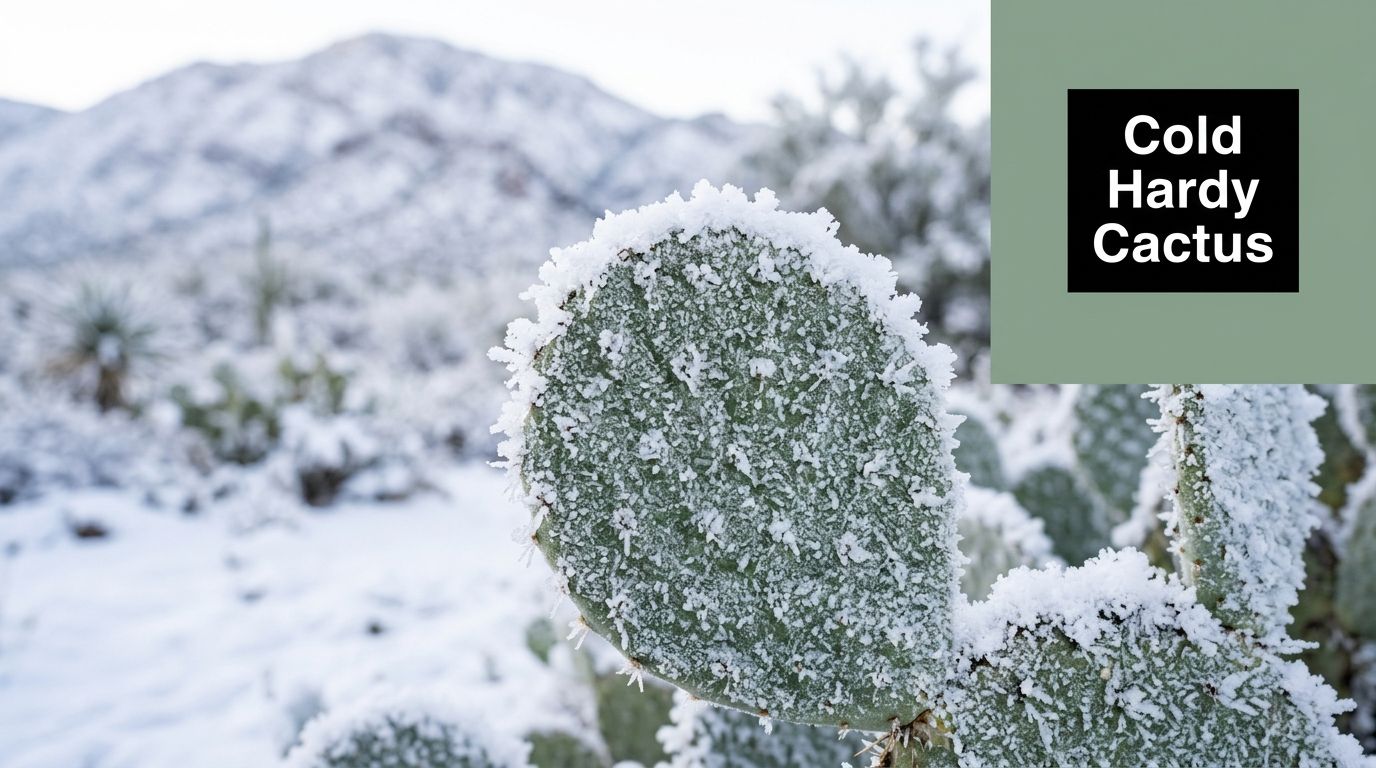
A cactus under snow looks wrong only if you were taught that every cactus belongs in hot sand. Northern gardeners know better. Some cacti are built for places with real winter, and they can look completely at home there.

I often compare this to seeing thyme spilling over a stone wall in January. The plant is not surviving by accident. It is growing in a site that sheds water, catches sun, and avoids the kind of wet, stagnant conditions that cause trouble. Hardy cacti follow the same logic.
Gardeners across colder parts of North America have grown cacti outdoors for years in rock gardens, raised berms, and gravelly slopes. Once you stop treating them like tropical oddities, they start to make sense. Their shape may read as desert, but their success often depends on mountain-style drainage.
Why the myth persists
The myth lasts because many gardeners meet cacti as houseplants, gift pots, or vacation photos from the Southwest. That creates a simple story: cactus equals heat. The full story is broader. Cacti come from a wide range of climates in North and South America, including regions where hard freezes are normal.
Some kinds are surprisingly tough in cold climates. The confusion starts when gardeners assume cold tolerance solves everything. It does not.
A cold hardy cactus can handle low temperatures and still fail fast in winter if its roots sit in dense, wet soil. That is the point many planting guides rush past. In northern gardens, the danger is often not the thermometer by itself. The danger is cold plus trapped moisture around the crown and roots.
A hardy cactus usually dies from the wrong winter footing, not from seeing snow.
What success looks like
A good cactus site looks closer to a rubble slope than a rich perennial border. Water should leave the planting area quickly. The crown should sit slightly high, not tucked into a low pocket where meltwater gathers. Gravel around the base helps keep pads clean and dry, much like a rain jacket helps a wool sweater stay useful in bad weather.
This is why broad advice like “use well-draining soil” leaves so many gardeners disappointed. Drainage is not just a soil ingredient. It is a structure. A berm, a tilted bed, added stone, and mineral-heavy backfill change how water moves in winter, which changes whether the plant lives or rots.
If you want a cactus to look natural in snow, start by giving it a place where snow can melt and move on. That single shift in perspective opens the door for hardy cacti in climates where many gardeners never thought to try them.
The Science of Cactus Antifreeze
The part that surprises northern gardeners is this: a hardy cactus prepares for winter by drying down.
That sounds wrong until you picture what kills plant cells in a hard freeze. Water inside the cells can freeze, expand, and tear delicate tissue. A cactus reduces that risk by lowering its water content before winter settles in. As the pads or stems lose moisture, the sap inside becomes more concentrated with sugars and other dissolved compounds. Those compounds lower the freezing point and help the tissues tolerate cold, much like salt helps keep ice from forming as quickly on a sidewalk.
Botanists call this physiological dehydration. Gardeners usually notice it first as a change in shape. Pads may wrinkle. Stems may shrink, lean, or look tired. The plant is not giving up. It is shifting into winter mode.
A shriveled cactus in January can be a healthy cactus in January.
That point matters because many losses start with a well-meant mistake. A gardener sees a puckered pad in late fall, decides the plant must be thirsty, and waters it. The cactus swells back up just before a freeze. Now the tissues are carrying more water than they should, and the roots are sitting in colder, wetter soil at the worst possible time.
Cold hardy agaves use a similar dry-down strategy, which is one reason cold-hardy agaves for winter gardens often succeed under the same dry, fast-draining conditions.
The biology explains a lot of the confusion around winter damage. People blame temperature because temperature is easy to see. The harder problem to notice is timing. If autumn rains, heavy mulch, flat ground, or a dense planting pocket keep the root zone wet, the cactus cannot settle into its protective dry state as well as it should. Winter injury often starts there.
This is also why a cactus can survive snow on its body and still fail at the crown. Snow itself can act like insulation. Cold mud around the base is another matter. When the crown stays damp and the roots stay oxygen-starved, the plant is more likely to rot before cold ever becomes the main issue.
So what should you look for in winter?
- Wrinkling can be normal. Mild shrinkage often means the plant has hardened for the season.
- Late-fall plumpness can be risky. It may mean the cactus is entering freeze season too full of water.
- Soft, dark tissue at the base is different. That points to rot, not healthy winter dehydration.
- Repeated freeze-thaw in wet soil is trouble. The plant handles cold better when excess water can move away quickly.
Once you understand that pattern, winter care gets simpler and more disciplined. You do less rescuing and more observing. You stop treating every shrivel as a crisis. You also see why structural drainage fixes matter so much. A raised berm, a gravel mulch that sheds water off the crown, and a mineral soil that dries between storms all support the plant's own antifreeze system. Without those conditions, even a hardy species can go into winter with the wrong chemistry and the wrong footing.
Choosing Your Prickly Survivors
A cold hardy cactus succeeds or fails long before the forecast reaches its lowest number. Species choice matters, but it matters in context. A cactus that sails through a dry Zone 4 winter can struggle in a milder garden where cold rain sits around the crown for weeks.
That is why I tell northern gardeners to choose plants the way you would choose winter boots. Warmth alone is not the whole story. Fit and conditions decide whether they work.
Start with two filters. First, ask how cold your winters get. Then ask a second question that often matters just as much. How wet is the ground from late fall through winter?
A few reliable names to know
If you are building your first planting, begin with species that have a long record of outdoor survival in cold regions.
- Echinocereus reichenbachii. One of the better choices for gardeners who face hard freezes and want a clumping cactus with strong flower show.
- Coryphantha vivipara var. vivipara. Small, tough, and often a smart fit where winter cold is serious.
- Pediocactus simpsonii and Escobaria vivipara. Both are widely regarded as strong candidates for very cold inland gardens.
- Opuntia polyacantha. A dependable prickly pear for gardeners who want spread, presence, and proven cold tolerance.
- Echinocereus triglochidiatus and Echinocereus fendleri. Good options if you want more upright form and bright bloom color in a dry rock garden setting.
If you want bold architectural companions around them, this guide to cold hardy agaves for colder gardens can help you plan combinations that still look intentional in winter.
Popular cold hardy cactus species
| Species (Common Name) | USDA Zone | Cold Tolerance | Key Feature |
|---|---|---|---|
| Echinocereus reichenbachii | Varies by source and clone | Very cold hardy | Showy flowers and strong winter toughness |
| Coryphantha vivipara var. vivipara | Varies by source and clone | Very cold hardy | Compact size for smaller spaces |
| Pediocactus simpsonii | Often grown in very cold regions | Exceptionally cold hardy | Suited to harsh continental winters |
| Escobaria vivipara | Often grown in very cold regions | Exceptionally cold hardy | Compact, durable, and reliable |
| Opuntia polyacantha (Plains Prickly Pear) | Widely grown in cold regions | Very cold hardy | Spreading habit and strong presence |
| Echinocereus fendleri | Broad regional adaptability | Cold hardy | Good flower display and tidy form |
| Echinocereus triglochidiatus (Claret Cup) | Depends on site and form | Cold hardy | Larger growth and vivid blooms |
How to decide among them
Choose by moisture pattern, not just zone. This is the mistake that trips up a lot of gardeners. In a dry High Plains winter, you can often grow species that would be harder to keep alive in a wetter eastern or Pacific Northwest bed. If your winters are rainy, start with the toughest, most rot-resistant candidates you can find locally, and plan to plant fewer species more carefully.
Match the plant's shape to your site. Opuntias spread and need room to dry around their pads. Smaller barrel or pincushion types can fit into tighter pockets between rocks, where runoff can be directed away from the base. Form is not only about looks. It changes how snow, rain, and splashing water interact with the plant.
Buy from growers who know outdoor performance in climates like yours. A plant grown soft and lush under protection may need time to adapt. A division or pad from a cactus that has already lived outside through winter in a similar region often settles in faster.
Here is the practical rule I wish more plant tags included. If your garden is cold and dry, your species list gets longer. If your garden is cold and wet, your species list gets shorter, and your site preparation has to get sharper.
That is one reason cold hardy cactus fit so well into drought-tolerant landscaping solutions. They reward gardens designed around runoff, sun exposure, and mineral surfaces instead of rich, moisture-holding beds.
A hardy name on a label helps. A plant that matches your winter moisture pattern helps much more.
The Right Foundation Your Cactus Needs
Cold hardy cactus usually die from winter wet, not from winter cold.
That single idea changes how you plant them. A cactus can tolerate bitter air if its crown and roots stay dry enough. Put the same plant in a flat bed that stays soggy through freeze-thaw cycles, and it often rots before spring. In northern gardens, the planting site works like a roof and a drain system at the same time.

Rule one, plant high and keep water moving
“Well-draining soil” is too vague to be useful. You need a site where water has somewhere to go.
A raised berm does that well. So does the upper shoulder of a slope, the edge of a rock garden, or a bed tucked under enough overhang to avoid repeated winter soaking. South- or west-facing spots also help because they dry faster after snow and cold rain. Avoid low pockets where water settles and cold air pools. Those spots behave like shallow bowls, and cactus crowns sit in the worst part of them.
If you're planning a broader low-water garden around these plants, these drought-tolerant landscaping solutions give helpful context for designing dry, durable planting areas.
Rule two, build the bed like a drainage layer, not a flower border
Rich garden soil is great for phlox. It is often a poor home for hardy cactus.
In cold climates, I want a mineral bed that sheds moisture quickly and stays open around the roots. Native soil can be part of the mix if it is not heavy clay, but the bed should include coarse, gritty material and plenty of stone. Fine compost and moisture-holding bark are useful in many borders. Around cactus, they can keep the root zone damp longer than the plant can tolerate in winter.
Shape matters as much as ingredients. A berm with a rounded top dries faster than a flat planting pad. Even a small rise can make a large difference because runoff leaves the crown instead of collecting around it.
Rule three, protect the crown with gravel mulch
The crown is where many failures begin.
Use angular gravel around the base of the plant, not wood mulch and not a collar of damp organic matter. Crushed gravel works like a splash guard. It keeps soil from washing onto the crown, reduces standing moisture right where rot starts, and helps the surface dry after storms. Angular pieces also lock together better than smooth pebbles, so the mulch stays where you put it on a slope or berm.
Gardeners often ask whether decorative stone is enough. Sometimes it is not. If the soil underneath still acts like a sponge, the gravel becomes a lid over a wet problem. The structure below the surface has to drain well too.
A planting method that fixes a common beginner mistake
Nursery potting mix is designed for containers, quick rooting, and regular irrigation. Winter beds ask for something different.
Before planting, remove as much of that soft, moisture-holding mix as you can without tearing the root system apart. Set the cactus slightly above the finished grade so the base is never buried in a shallow basin. Then firm mineral soil around the roots and finish with gravel at the surface. This approach feels spare compared with typical perennial planting, but hardy cactus prefer that lean, airy setup.
A simple sequence helps:
- Gently loosen and remove most of the old potting mix.
- Set the plant a little high, with the crown above surrounding grade.
- Backfill with gritty, mineral soil.
- Top-dress with crushed gravel around the base.
- Leave open space around the plant so sun and air can dry the surface.
For gardeners comparing planting methods with seasonal maintenance, this guide to winter cactus care for outdoor and container plants is a useful companion.
This is also one place where the seller matters. The Cactus Outlet offers cactus and succulent plants with species-specific care context, which helps when you're matching a plant to a difficult outdoor site.
Preparing for the Big Chill
Cold hardy cactus rarely die because winter air was too cold. In northern gardens, they usually fail because cold arrives while the roots are still sitting in wet soil.
That difference matters. A dry cactus can handle temperatures that would kill many familiar perennials. A waterlogged cactus loses that margin of safety fast, much like a roof that can carry snow until the plywood underneath turns soft.

Let the plant harden off
By late summer, your job changes. You are no longer trying to produce fresh growth. You are helping the plant finish the season, firm its tissues, and settle into dormancy.
Cut back supplemental water as nights cool. Skip late doses of high-nitrogen fertilizer. If the cactus looks a bit less swollen by autumn, that is often a good sign. New gardeners sometimes read that as stress, but for many hardy species it is part of winter readiness.
Wet autumns cause more trouble than deep freezes
Gardeners often assume snow is the enemy. Repeated cold rain is more dangerous.
A hardy cactus can sit under dry snow quite comfortably because snow insulates and usually sheds away from the crown. Chilly rain in October or November is another story. Water seeps into the root zone, splashes onto the base, and lingers during short days when the bed dries slowly.
That is why structural protection works better than wishful thinking. If your climate turns wet before it turns cold, use physical methods that keep water away from the plant in the first place.
A few reliable options:
- Place prized plants where a roof overhang blocks part of the fall rain.
- Set a clear temporary rain cover over the bed during long wet spells, while leaving the sides open for airflow.
- Check that downspouts, sump outlets, and path runoff do not drain toward the cactus.
- Refresh the gravel around the crown if soil or leaf litter has started to collect there.
- Remove fallen leaves that trap moisture against pads and stems.
For a broader seasonal checklist, this guide to winter cactus care for outdoor and container plants is a useful companion.
Gardeners who protect tender offsets or keep backup plants under cover may also find ideas in these sustainable greenhouse solutions.
Changes that are normal
Hardy cacti often look less attractive in winter than they do in July. Pads may shrivel slightly. Stem segments can flatten. Green tissue may shift toward purple, red, or bronze as protective pigments become more visible in the cold.
Those changes are part of the plant's defense system. The cactus is reducing exposed surface area and adjusting its internal water balance. A firm, slightly shrunken plant is often in better shape than a plump one heading into a freeze.
The visual shift is one reason it helps to watch another gardener handle these plants through the season. This short video gives a practical look at cold-weather cactus care.
Changes that signal trouble
Focus less on color and more on texture.
Soft tissue at the crown, a sour smell, blackened spots near the soil line, or a bed that stays dark and damp for days after rain are the warning signs that deserve action. Those symptoms point to rot risk. Winter wrinkling alone usually does not.
If a plant fails, start by studying the site after a storm or thaw. Where does the water collect? How long does the crown stay wet? In cold climate cactus growing, that post-rain view often explains more than the temperature chart does.
Expanding Your Resilient Oasis
Once you've kept a cold hardy cactus alive through one winter, your thinking changes. You stop treating it like an experiment and start seeing design possibilities.
These plants work especially well in gravel gardens, dry slopes, rock edges, and hellstrips where conventional perennials struggle. Their forms stay visible when herbaceous plants disappear, so the bed keeps structure all year.
Good companions for the same conditions
Choose plants that like the same lean, bright, fast-draining conditions. Good partners include:
- Sedums for spreading ground cover and seasonal flower contrast
- Yucca for upright blades and winter presence
- Hardy agaves where conditions suit them
- Small ornamental grasses that don't smother the crown area
- Rock garden perennials that tolerate mineral soils
The goal isn't to make the bed look desert-themed in a theatrical way. It's to build a planting that shares the same rules about drainage, open exposure, and modest fertility.
If you use covered growing spaces to start offsets or protect tender plants, these ideas for sustainable greenhouse solutions offer practical inspiration without overcomplicating the setup.
Propagating prickly pear from pads
Prickly pears are among the easiest cacti to multiply. The process is simple if you stay patient.
- Choose a healthy pad during active growth.
- Remove it cleanly and let the cut surface dry and callus before planting.
- Use a gritty mix rather than rich potting soil.
- Set the pad upright so only the base is anchored.
- Wait before watering heavily. Newly set pads root better when they aren't kept soggy.
That's one of the pleasures of growing these plants. A single established clump can often become several plantings over time.
If you're designing with cold as well as drought in mind, this guide to frost protection for plants adds useful context for the rest of the garden around your cactus bed.
Cold Hardy Cactus FAQs
Do cold hardy cacti need fertilizer?
Sometimes. Not always.
According to the cited guidance on feeding hardy cacti, in-ground plants in native soils rarely need fertilizer, while potted specimens or those in raised beds often require monthly feeding during the growing season to support larger growth and flowering (monthly feeding guidance for containers and raised beds).
If your plant is in a mineral garden bed and looks balanced, restraint is usually better than excess. If it's in a container or a very lean raised planting, regular but modest feeding during active growth can help.
My cactus has a mushy spot after winter. What does that mean?
Mushy tissue usually points to moisture damage or rot, especially near the crown. Cold alone rarely causes that soft collapse. Wet soil, trapped water, or organic mulch packed against the base is the more common pattern. Remove any decayed material if it's localized, then correct the site before replanting or replacing.
Can I grow a cold hardy cactus in a container?
Yes, but containers make moisture management more demanding. The potting medium has to drain fast, and the container should sit where winter rain can't keep soaking it. A covered, bright location often works better than leaving a pot exposed in the open.
Why did my cactus turn reddish or orange in winter?
That can be a normal cold-weather response. Some hardy cacti shift color as part of seasonal adaptation. It doesn't automatically signal illness. Worry more about softness and persistent wetness than about a winter color change on an otherwise firm plant.
Why did mine fail even though the label said it was hardy in my zone?
Zone ratings only answer one question: temperature. They don't account for heavy clay, low winter sun, runoff from a roof, or a flat bed that stays saturated. A cold hardy cactus can handle the cold and still lose the battle to poor drainage.
If you're ready to try a cactus outdoors in a colder climate, start with the site before you start with the plant. Then explore the species and care resources at The Cactus Outlet to find a cold hardy cactus that fits your conditions and your garden style.